29 SEPTEMBER 2026

International Day of Awareness of Food Loss and Waste: Every link in the food chain counts

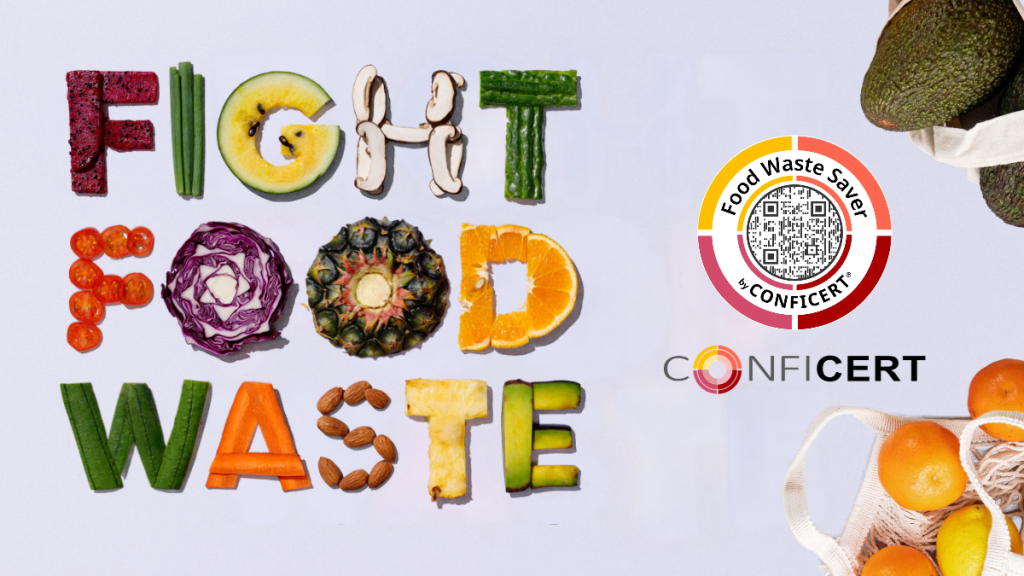
On the International Day of Awareness of Food Loss and Waste, CONFICERT points out that the problem affects every link in the food chain and reaffirms its commitment to preventing it. Through its Food Waste Saver Brand, it transparently certifies the efforts of agri-food operators to fight food waste, thereby contributing to SDG Target 12.3.

From Farm to Fork: The World Loses 13% of Its Food and Wastes Another 19%

Every September 29, the United Nations calls for accelerating progress toward SDG Target 12.3: halving food loss and waste by 2030. The challenge spans the entire chain:

  • In primary production and food industry, 13.3% of food is lost between harvest and sale, peaking at 25.4% for fruits and vegetables and 14% for meat and animal products (FAO, 2023).
  • At the consumption stage, another 1.05 billion tonnes are wasted: 12% in distribution and retail, 28% in the HoReCa channel, and 60% in households (UNEP, 2022).

The European Union, one of the regions that most thoroughly measures waste across the entire chain, confirms the weight of the sector: 47% is generated outside households, and manufacturing is the link with the highest volume, at 11 million tonnes (Eurostat, 2023). The impact goes beyond food: food loss and waste generate between 8% and 10% of global greenhouse gas emissions and cost nearly $1 trillion a year (UNEP, 2024).

From Farm to Fork: The World Loses 13% of Its Food and Wastes Another 19%

More and more countries are turning SDG Target 12.3 into law. Through Directive (EU) 2025/1892, the EU requires a 10% reduction in food waste in manufacturing by 2030, and a 30% per capita reduction across retail, food service, and households. Spain, through Law 1/2025, requires all food chain operators to have a prevention plan and to prioritize donation for human consumption.

Food Waste Saver: A Transparent Commitment Against Food Waste

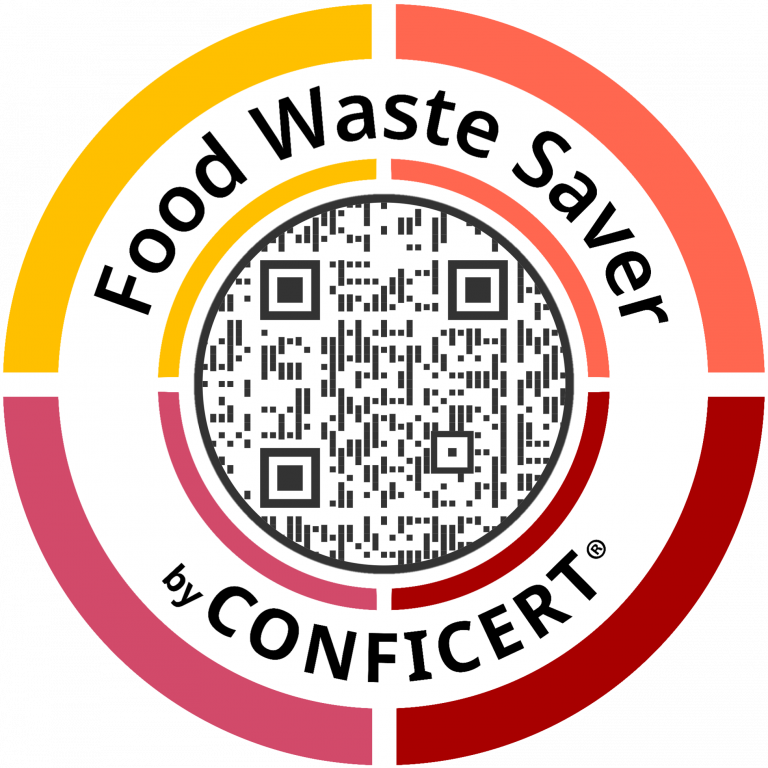
Food Waste Saver is CONFICERT’s global certification Brand for food waste prevention and surplus management. Aligned with the 2030 Agenda and SDG 12.3, it applies the same requirements in every country where it is certified, in line with applicable national legislation, and is structured into four scopes:

  • Primary production: agriculture, livestock farming, and aquaculture.
  • Food industry: processing, preservation, packaging, and storage.
  • Large-scale distribution and retail: warehouses, logistics platforms, and points of sale.
  • HoReCa channel: bars, restaurants, hotels, and central catering kitchens.

Each operator is audited against a scope-specific checklist covering legal compliance, prevention, surplus management, documentation and traceability, and measurement and monitoring. Audits are carried out by certification bodies authorized by CONFICERT, and all certified operators can be consulted on the CONFICERT Transparency Portal.

For consumers, the seal is a safeguard against greenwashing: it identifies companies whose commitment to fighting food waste has been independently verified. For companies, it is a way to demonstrate regulatory compliance and the application of the food use hierarchy, which prioritizes directing surplus food to human consumption. It also allows them to stand out in their sector as organizations committed to excellence and transparency.

Would you like to certify your company with Food Waste Saver? Check it here.
Share the news on:

Read more news

International Day of Awareness of Food Loss and Waste: Every link in the food chain counts

29 SEPTEMBER 2026

On the International Day of Awareness of Food Loss and Waste, CONFICERT points out that the problem affects every link in the food chain and reaffirms its commitment to preventing it. Through its Food Waste Saver Brand, it transparently certifies the efforts of agri-food operators to fight food waste, thereby contributing to SDG Target 12.3.

From Farm to Fork: The World Loses 13% of Its Food and Wastes Another 19%

Every September 29, the United Nations calls for accelerating progress toward SDG Target 12.3: halving food loss and waste by 2030. The challenge spans the entire chain:

  • In primary production and food industry, 13.3% of food is lost between harvest and sale, peaking at 25.4% for fruits and vegetables and 14% for meat and animal products (FAO, 2023).
  • At the consumption stage, another 1.05 billion tonnes are wasted: 12% in distribution and retail, 28% in the HoReCa channel, and 60% in households (UNEP, 2022).

The European Union, one of the regions that most thoroughly measures waste across the entire chain, confirms the weight of the sector: 47% is generated outside households, and manufacturing is the link with the highest volume, at 11 million tonnes (Eurostat, 2023). The impact goes beyond food: food loss and waste generate between 8% and 10% of global greenhouse gas emissions and cost nearly $1 trillion a year (UNEP, 2024).

Toward 2030: From Commitment to Obligation

More and more countries are turning SDG Target 12.3 into law. Through Directive (EU) 2025/1892, the EU requires a 10% reduction in food waste in manufacturing by 2030, and a 30% per capita reduction across retail, food service, and households. Spain, through Law 1/2025, requires all food chain operators to have a prevention plan and to prioritize donation for human consumption.

Food Waste Saver: A Transparent Commitment Against Food Waste

Food Waste Saver is CONFICERT’s global certification Brand for food waste prevention and surplus management. Aligned with the 2030 Agenda and SDG 12.3, it applies the same requirements in every country where it is certified, in line with applicable national legislation, and is structured into four scopes:

✓Primary production: agriculture, livestock farming, and aquaculture.

✓ Food industry: processing, preservation, packaging, and storage.

✓ Large-scale distribution and retail: warehouses, logistics platforms, and points of sale.

✓ HoReCa channel: bars, restaurants, hotels, and central catering kitchens.

Each operator is audited against a scope-specific checklist covering legal compliance, prevention, surplus management, documentation and traceability, and measurement and monitoring. Audits are carried out by certification bodies authorized by CONFICERT, and all certified operators can be consulted on the CONFICERT Transparency Portal.

For consumers, the seal is a safeguard against greenwashing: it identifies companies whose commitment to fighting food waste has been independently verified. For companies, it is a way to demonstrate regulatory compliance and the application of the food use hierarchy, which prioritizes directing surplus food to human consumption. It also allows them to stand out in their sector as organizations committed to excellence and transparency.

Would you like to certify your company with Food Waste Saver? Check it here.
Share the news on:

International Day of Awareness of Food Loss and Waste: Every link in the food chain counts

29 SEPTEMBER 2026

On the International Day of Awareness of Food Loss and Waste, CONFICERT points out that the problem affects every link in the food chain and reaffirms its commitment to preventing it. Through its Food Waste Saver Brand, it transparently certifies the efforts of agri-food operators to fight food waste, thereby contributing to SDG Target 12.3.

These new certifications have been developed to recognize and promote responsible practices in the use of natural resources, aligning with ESG (Environmental, Social & Governance) principles that increasingly guide business and investment decisions worldwide.

From Farm to Fork: The World Loses 13% of Its Food and Wastes Another 19%

Every September 29, the United Nations calls for accelerating progress toward SDG Target 12.3: halving food loss and waste by 2030. The challenge spans the entire chain:

  • In primary production and food industry, 13.3% of food is lost between harvest and sale, peaking at 25.4% for fruits and vegetables and 14% for meat and animal products (FAO, 2023)
  • At the consumption stage, another 1.05 billion tonnes are wasted: 12% in distribution and retail, 28% in the HoReCa channel, and 60% in households (UNEP, 2022).

The European Union, one of the regions that most thoroughly measures waste across the entire chain, confirms the weight of the sector: 47% is generated outside households, and manufacturing is the link with the highest volume, at 11 million tonnes (Eurostat, 2023). The impact goes beyond food: food loss and waste generate between 8% and 10% of global greenhouse gas emissions and cost nearly $1 trillion a year (UNEP, 2024).

Toward 2030: From Commitment to Obligation

More and more countries are turning SDG Target 12.3 into law. Through Directive (EU) 2025/1892, the EU requires a 10% reduction in food waste in manufacturing by 2030, and a 30% per capita reduction across retail, food service, and households. Spain, through Law 1/2025, requires all food chain operators to have a prevention plan and to prioritize donation for human consumption.

Food Waste Saver: A Transparent Commitment Against Food Waste

Food Waste Saver is CONFICERT’s global certification Brand for food waste prevention and surplus management. Aligned with the 2030 Agenda and SDG 12.3, it applies the same requirements in every country where it is certified, in line with applicable national legislation, and is structured into four scopes:

  • Primary production: agriculture, livestock farming, and aquaculture.
  • Food industry: processing, preservation, packaging, and storage.
  • Large-scale distribution and retail: warehouses, logistics platforms, and points of sale.
  • HoReCa channel: bars, restaurants, hotels, and central catering kitchens.

Each operator is audited against a scope-specific checklist covering legal compliance, prevention, surplus management, documentation and traceability, and measurement and monitoring. Audits are carried out by certification bodies authorized by CONFICERT, and all certified operators can be consulted on the CONFICERT Transparency Portal.

For consumers, the seal is a safeguard against greenwashing: it identifies companies whose commitment to fighting food waste has been independently verified. For companies, it is a way to demonstrate regulatory compliance and the application of the food use hierarchy, which prioritizes directing surplus food to human consumption. It also allows them to stand out in their sector as organizations committed to excellence and transparency.

Would you like to certify your company with Food Waste Saver? Check it here.

Share the news on: